When you’re shipping goods from Singapore to Europe, your container decision shapes cost, transit time, and risk exposure. FCL and LCL aren’t interchangeable options—they serve different shipment profiles entirely. Choose wrong, and you’ll either overpay for unused container space or absorb delays from consolidation bottlenecks. Before booking your next shipment, you’ll want to understand exactly how cargo volume and budget constraints should drive this decision.
What’s the Difference Between FCL and LCL Shipping?
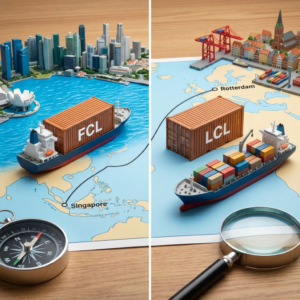
When you’re shipping goods from Singapore to Europe, understanding FCL and LCL comes down to how you allocate container space. With FCL, you book an entire sea freight container exclusively for your cargo, regardless of volume. With LCL, you share container space with other shippers, paying only for the portion your goods occupy. This distinction drives cost, transit time, and handling procedures.
FCL Shipping to Europe: Benefits and Drawbacks
Because you’re securing an entire container for your exclusive use, FCL shipping offers distinct advantages for Singapore-to-Europe routes. You’ll benefit from reduced handling, lower damage risk, and faster transit times since there’s no consolidation or deconsolidation at transshipment hubs. However, you’re paying for full container capacity regardless of actual cargo volume, making FCL less economical for shipments under 15 cubic metres.
LCL Shipping to Europe: Benefits and Drawbacks
Concerning cost efficiency, LCL shipping lets you pay only for the container space your cargo actually occupies, making it the logical choice for shipments below that 15 cubic metre threshold. You’ll face longer transit times due to consolidation and deconsolidation at hub ports, increased handling risk, and reduced flexibility on scheduling. Customs clearance can also take longer since your cargo shares documentation with other shippers.
FCL or LCL: How to Choose Based on Cargo Volume and Budget
Calculate your cargo volume first—it’s the single most decisive factor in this decision. If you’re shipping under 15 CBM, LCL typically wins on cost. Above 15 CBM, FCL becomes more economical per unit. Factor in your budget flexibility too: FCL demands higher upfront payment but lower per-CBM rates, while LCL offers lower entry costs with consolidation fees and longer transit times.